By: Olaf Gröger, director at Hyphen
Underused office buildings can offer new opportunities for hospitality, but not every property will make a viable hotel. Hyphen director Olaf Gröger considers the location, planning, spatial and operational questions that need to be tested.
Changing patterns of work, leisure and travel are prompting owners and investors to look again at underused office buildings. Converting an office into a hotel can give an existing asset a new use, particularly where the property has character or occupies a location with established visitor and business demand. But an empty office is not automatically a hotel opportunity.
Location, planning, the physical building and the practical demands of hotel operation all need to be assessed together.
Is the location right for a hotel?
Location remains central to the financial viability of any hotel. Visitor demand, tourism and business activity vary considerably between cities and neighbourhoods. A property in an established destination will present a different opportunity from one in a market with less consistent demand.
An office may be physically suitable for conversion, but that does not mean its location can support the proposed hotel. Understanding the market is therefore an essential part of assessing the property.
What will planning allow?
Planning can determine whether a conversion is possible and how long it may take. An authority may support the reuse of an existing building in principle, but that does not guarantee a quick or straightforward approval process. Timelines can extend, and requirements will vary according to the building, its location and the proposed change of use.
The planning route needs to be understood from the outset. Carbon and energy performance should also be considered when testing the case for reuse against demolition and rebuilding.
Can the building accommodate hotel use?
Offices and hotels are planned around very different requirements. Floorplate depth, access to daylight, structural grids and ceiling heights can all affect how guestrooms and the services needed to support them are accommodated.
Irregular structural grids and uneven ceiling heights, which are common in older commercial buildings, may make air conditioning, plumbing and electrical systems more difficult to integrate and distribute.
These factors need to be tested before room numbers, layouts and the extent of the required intervention can be properly understood.
Can it work operationally?
Guestrooms and public spaces are only part of a hotel. Back-of-house areas and services need to be planned from the beginning, including the service core, laundry provision, loading facilities, housekeeping storage and staff routes.
Without laundry services, loading docks, housekeeping storage and staff routes, you do not have a hotel. Office buildings were not designed around this operational structure. Trying to fit it in after the main layouts have been developed can add complexity and cost, depending on the building’s age and condition.
Guests may never notice a poorly planned back-of-house area, but the operator and staff will feel its effects every day.
Can the existing character support the guest experience?
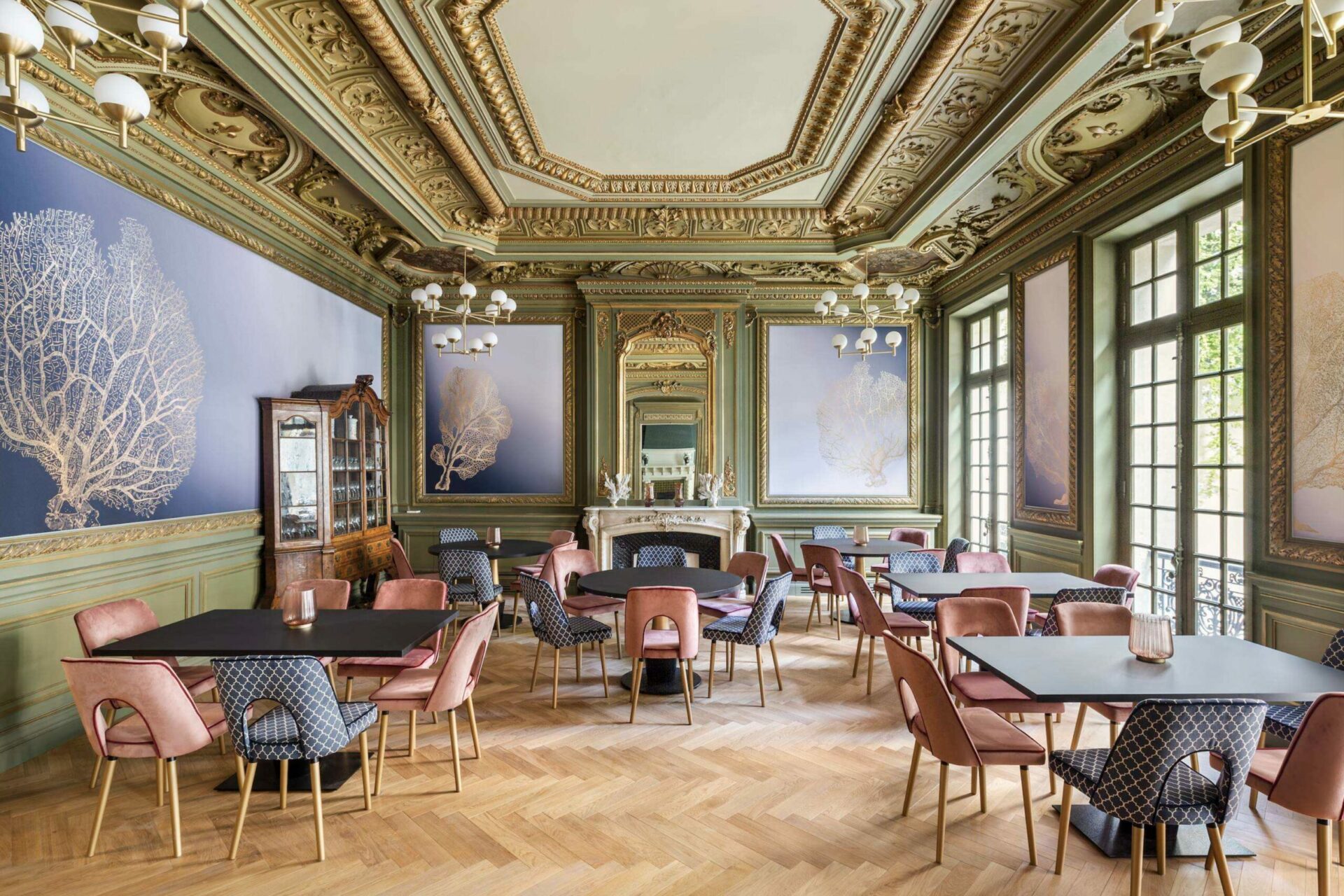
Existing buildings can offer character rooted in their history and former use. Original features and reminders of a building’s past can contribute to a hotel’s identity and give guests a stronger sense of place.
These elements may also present design and technical challenges. The task is to understand which qualities can be retained or incorporated while meeting the practical requirements of a modern hotel.
Heritage or character should not automatically be treated as an obstacle. Where handled carefully, it can become part of the experience the hotel offers.
Testing the fundamentals
No single factor determines whether an office will make a viable hotel. A strong location does not remove the need to understand the building. Planning support in principle does not guarantee a quick process. A layout that accommodates guestrooms will not compensate for inadequate servicing or back-of-house provision.
Location, planning, spatial constraints, building services and hotel operations all need to be tested together. The question is not simply whether an office can be converted into a hotel, but whether it can work as one.
Olaf first explored this subject in Boutique Hotel News. Read the original article: Why empty offices are Europe’s next hospitality goldmine