
By Olaf Gröger, director at Hyphen
A historic building’s character can contribute to its commercial appeal as a hotel. Realising that opportunity takes architectural know-how to preserve original features while accommodating modern services and daily operations.
For real estate developers, asset managers and investors, historic buildings offer the opportunity to create hotels with a distinctive identity. Their architecture and previous uses can give guests a connection to a place that is difficult to reproduce in a new building.
That appeal comes with practical demands. The features that distinguish a property may also complicate its conversion. Heritage needs to inform the design from the outset, with commercial and operational requirements considered alongside the work of conservation.
Making room for modern services
Introducing air conditioning, plumbing and electrical systems without damaging or obscuring original features is one of the challenges of converting historic buildings. Irregular structural grids and uneven ceiling heights can make this work particularly difficult.
A conservation-minded architect looks for routes through voids in non-original parts of the building and later additions, avoiding protected areas. Technical decisions about where services run help retain the interiors that contribute to the hotel’s identity.
The spaces supporting daily operations need equally early attention. Laundry facilities, deliveries, housekeeping storage and staff routes must be planned alongside guestrooms and public areas. These functions may be less visible to guests, but they are essential to the people running the hotel.
Applying that approach in Marseille
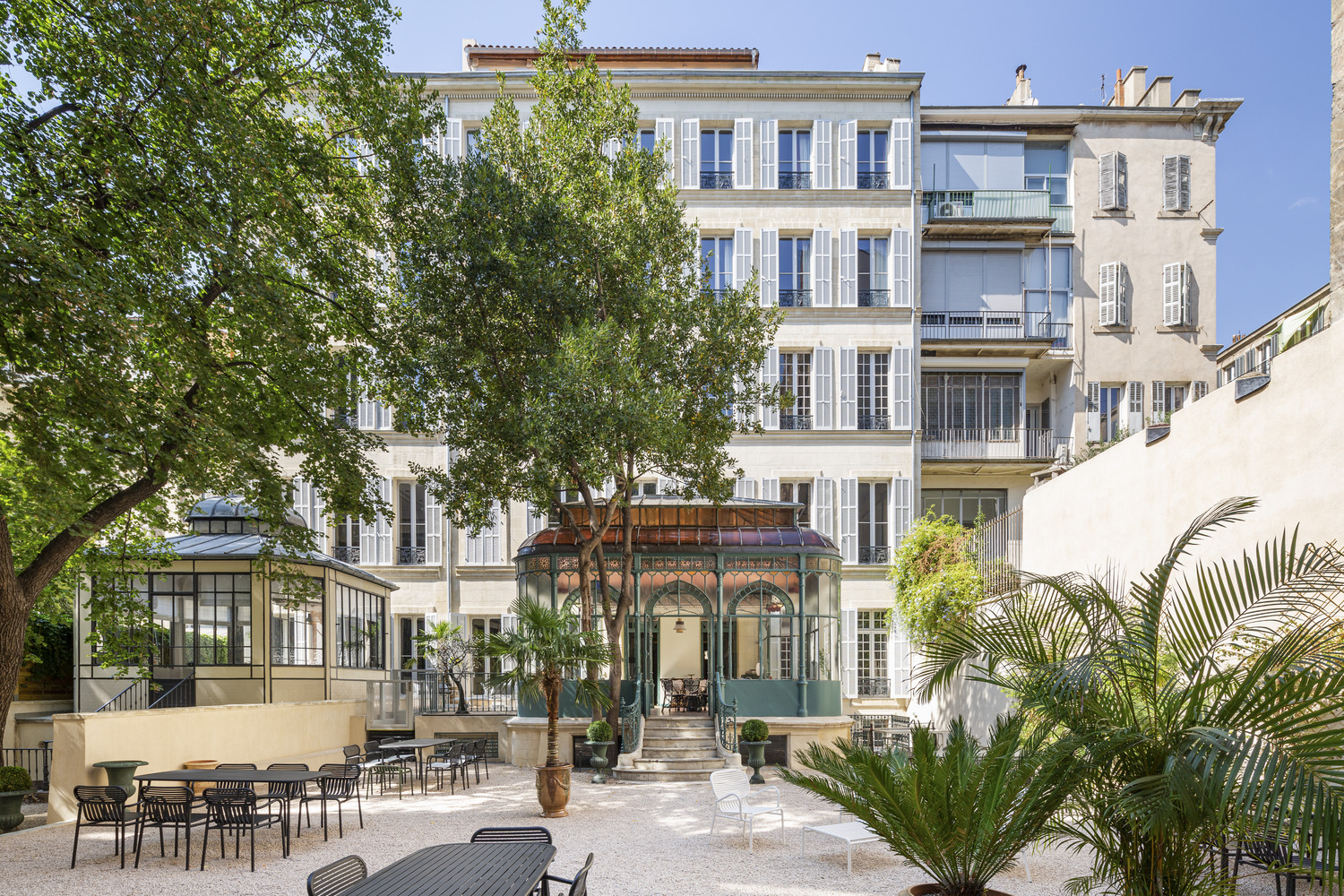
The conversion of a 19th-century mansion in Marseille brought these demands into focus. Originally built in 1860 and enriched with neo-Renaissance details, the building had served as offices for much of its later life before becoming a 51-room hospitality venue.
The team created a logistics hub beneath the courtyard and used laboratory testing to assess historic ceilings for fire safety. Original cornices, balustrades and wall paintings were protected as the building was adapted.
Each intervention addressed a particular requirement of the conversion. The courtyard provided space for logistics, while testing supported the approach to fire safety in historic interiors. The work combined technical problem-solving with careful preservation to accommodate the building’s new commercial use.
Supporting lasting appeal
Interest in distinctive places to stay creates an opportunity, but novelty alone will not sustain demand. Operators need to maintain attention to authenticity and craft while remaining commercially and operationally focused.
The same consideration matters to those developing, managing and investing in these assets. A building’s history contributes to its appeal; its success as a hotel also depends on the teams adapting it. Architects and developers need to combine respect for that history with a practical understanding of what the hotel must deliver.
Olaf explored this subject in Luxury Hospitality Magazine. Read the original article: The buildings with a past make the best hosts.